Why Your Website Is Your Most Powerful Salesperson (And How to Make It Work 24/7)
Think about your best salesperson for a moment. They know your product inside out. They communicate your value clearly. Now ask yourself — does your website do any of that?
Think about your best salesperson for a moment. They know your product inside out. They communicate your value clearly. They handle objections before they come up. They make people feel confident about choosing you. And they close deals.
Now ask yourself — does your website do any of that?
For most businesses, the honest answer is: not really. The website exists. It looks decent. It has the basic information. But it isn't actually selling anything. It's more like a digital business card than a digital salesperson.
And that's a massive missed opportunity — because unlike your human team, your website works around the clock, never takes a day off, never has a bad day, and can interact with thousands of potential customers simultaneously.
The question isn't whether you have a website. The question is whether yours is actually doing its job.

The Shift You Need to Make
Most businesses think about their website as a place to put information. A home page, an about page, a services page, a contact form. Check the boxes, move on.
But the businesses that generate real results from their websites think about their website as a conversion system — a carefully designed journey that takes a stranger and moves them, step by step, toward becoming a customer.
That shift in thinking changes everything. Suddenly every page, every headline, every button, every image has a job to do. And if it isn't doing that job, it doesn't belong.

What a High-Performing Website Actually Looks Like
Let's get specific. Here are the elements that separate a website that converts from one that just exists:
Speed That Doesn't Make People Wait
This is non-negotiable. Studies consistently show that if your website takes more than 3 seconds to load, a significant portion of your visitors will leave before they even see what you do.
Speed isn't just a technical detail — it's a first impression. A slow website tells people, subconsciously, that your business isn't sharp. A fast one signals the opposite.
A Message That Lands in Seconds
When someone lands on your website, they're asking one question immediately — is this for me?
You have about 5 seconds to answer that question before they make a decision. That means your headline, your subheading, and your hero section need to communicate exactly who you help, what you do, and why it matters — clearly, specifically, and without making people work for it.
If your homepage opens with your company name and a vague tagline, you're already losing people.
A Clear Path to Take Action
Every page on your website should have one primary thing it wants the visitor to do next. One clear call to action. Not five options, not a confusing menu of possibilities — one next step that makes sense given where they are in their journey.
The more decisions you ask someone to make, the less likely they are to make any of them. Make it easy. Make it obvious. Make it one thing.
Trust Signals That Do the Heavy Lifting
People don't just buy what you offer. They buy from businesses they trust. And trust is built through proof.
That means testimonials from real clients. Case studies that show actual results. Logos of brands you've worked with. Clear, specific descriptions of what working with you looks like. The more concrete evidence you can offer that you're the real deal, the more confident a visitor feels about taking the next step.
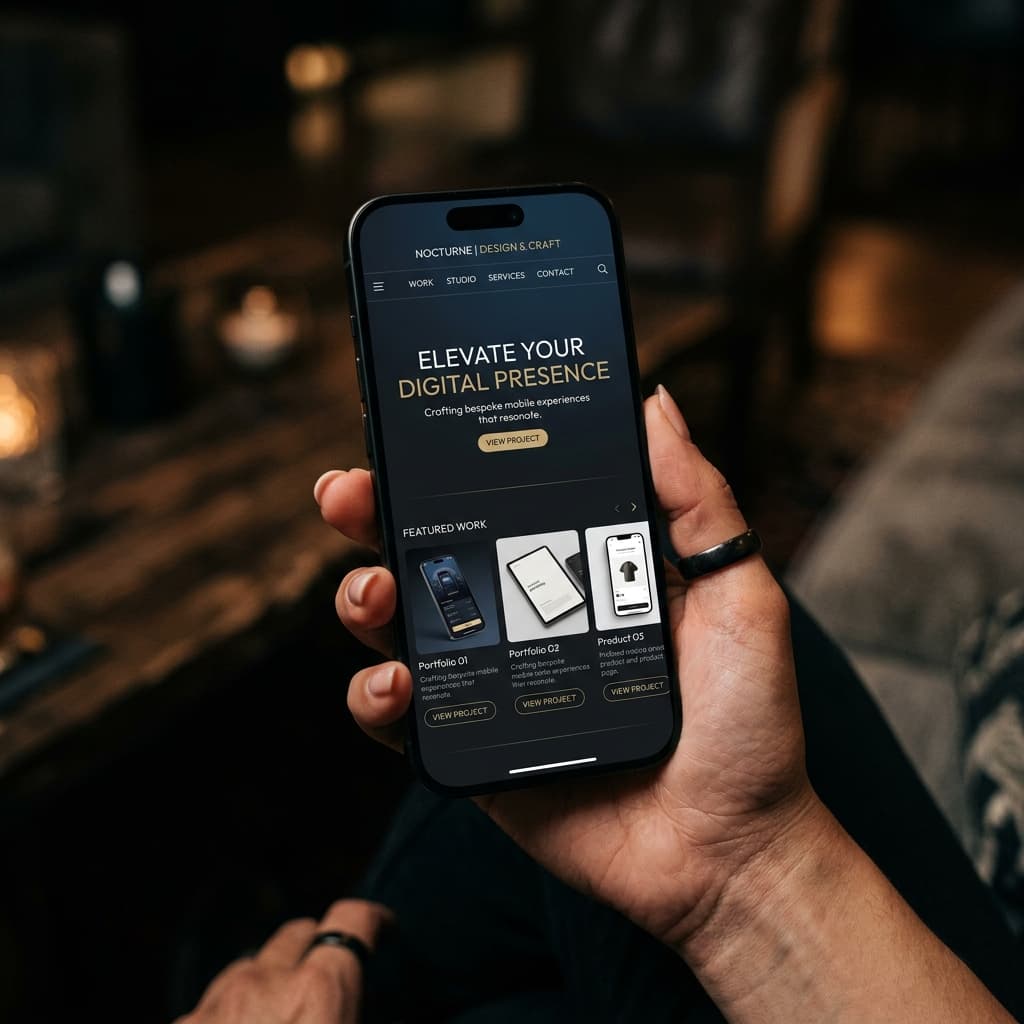
A Mobile Experience That Actually Works
More than half of all web traffic today comes from mobile devices. If your website isn't genuinely great on a phone — not just technically responsive, but actually easy and enjoyable to use on a small screen — you're losing a huge portion of your potential customers before they even get started.
Mobile isn't an afterthought anymore. For most businesses, it's the primary experience.
The Hidden Cost of a Weak Website
Here's something worth sitting with for a moment.
Every day that your website isn't converting the way it should, you're leaving money on the table. People are finding you — through search, through referrals, through social media — landing on your site, and leaving without taking action.
You'll never know their names. You'll never get the chance to follow up. They'll just be gone, probably to a competitor whose website did a better job of making them feel confident.
A weak website doesn't just fail to generate business. It actively loses business you were already close to winning.
What Your Website Should Be Doing Right Now
Let's make this practical. Here's a quick checklist to assess where yours stands:
If you answered no to two or more of those, your website has room to work harder for you.

The Good News
A high-performing website isn't about being the flashy candidate. It's about being the clear, fast, and trustworthy one. You don't need a thousand pages. You need the right pages, doing the right job.
At GIJUHAN, we don't just build websites that look good. We build websites that sell. We focus on the systems that drive growth, so your website becomes the hardest-working member of your team.
The Bottom Line
Your website is not a digital brochure. It's not a box to check. It's not something you build once and forget about.
It's a living, working part of your business — and when it's built right, it's the most cost-effective salesperson you'll ever have.
The businesses growing fastest right now aren't just the ones with the biggest marketing budgets. They're the ones who figured out that a great website isn't an expense. It's an investment that pays back every single day.
Is yours pulling its weight? At GIJUHAN, we build websites that don't just look good — they work hard. If you're ready to turn your website into your best-performing sales asset, let's make it happen.